REVEALED: When are players removed from Survivor?
Getting your torch snuffed is supposed to be the most dramatic exit in reality TV — but a vote at Tribal Council isn't the only way out of Survivor. From devastating medical emergencies to shocking production removals, the show has pulled players from the game in ways fans never saw coming, and some of those exits are far more gut-wrenching than any blindside.
Survivor is famously one of the toughest games on television — a test of physical endurance, social strategy, and sheer mental grit. But here’s something the show doesn’t always make obvious: getting your torch snuffed after a Tribal Council vote isn’t the only exit door. In fact, not everyone who sets foot on that beach on Day 1 will leave the same way.
Over 50 seasons and 26 years, the show has had to remove players in ways that go far beyond the game itself — and some of those stories are shocking, heartbreaking, or downright controversial. Let’s break down every way a player can be pulled from Survivor.
Medical Evacuations: When the Body Gives Out
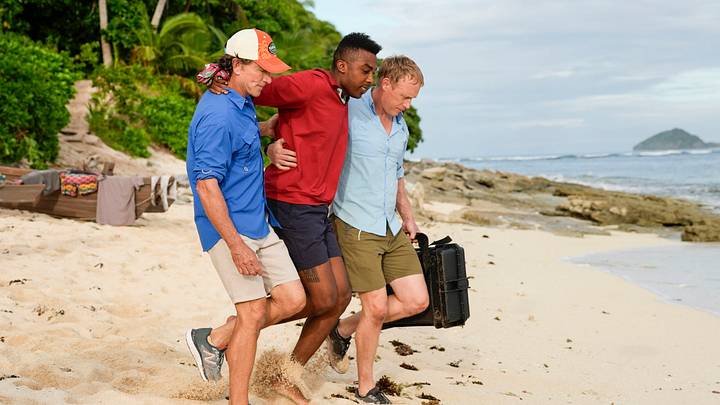
This one is the hardest to watch, because it almost always happens completely against the player’s will. When a health situation becomes so serious that the Survivor medical team determines a castaway risks permanent injury — or worse — by staying in the game, they make the call to pull them out. The player’s wishes simply don’t factor in at that point.
Across 50 seasons, 22 players have been medically evacuated. These exits are some of the most emotional in the show’s history. Terry Deitz’s medevac in Survivor: Cambodia stands out — he was pulled to deal with a family medical emergency, and fans were gutted watching him leave a game he was playing so well.
What doesn’t count as a medevac? Players who “self-evacuate” — meaning they chose to leave because of an injury rather than being ordered out by the medical team. Matthew Grinstead-Mayle in Survivor 44 is a prime example. He hurt his arm at camp and made the personal decision to leave. That’s quitting, even if it hurts just as much to watch.




Quitting: The Exit Nobody Wants to Talk About
In 50 seasons, 14 players have quit Survivor. It’s a controversial topic among the fanbase — quit and you’re forever branded as someone who gave up on the dream that thousands of applicants desperately want. Most of the time, fans are not forgiving.
But there is one quit that even the harshest critics can’t condemn. After winning Survivor: The Amazon, Jenna Morasca returned to play two seasons later. Nine days into the game, something in her gut told her she needed to go home. Her mother was terminally ill back in the States, and no amount of prize money or game strategy felt worth staying for.
She left. Eight days later, her mother passed away.
Jenna made it home in time. And that’s the one quit in Survivor history that fans will always understand — because she didn’t quit the game. She chose her family. That’s not weakness. That’s everything.
Every other quit? Fans are far less sympathetic. Social media lights up every time someone walks off that beach by choice, and the criticism can follow a player for years.
Production Removal: The Nuclear Option
This is the rarest — and most dramatic — way to leave Survivor. And for most of the show’s history, it simply didn’t happen. Then came Survivor: Island of the Idols.
Kellee Kim bravely came forward during filming to report that she felt physically uncomfortable with how one of her male tribe mates was touching her. Production noted the complaint — but here’s where things got messy. Her tribe mates interpreted her speaking up as in-game drama, and on Day 22, they voted her out.
The situation didn’t end there. On Day 36, host Jeff Probst gathered the remaining castaways to deliver a bombshell: the player Kellee had reported had been removed from the game after an incident involving a member of the production crew. No vote. No torch snuff. Just gone.
At the post-season reunion, Jeff Probst publicly apologized to Kellee and announced that Survivor would be implementing new policies to prevent anything like this from happening again. The fan reaction was fierce — many felt the show had failed Kellee from the start, and the episode remains one of the most debated in the show’s history.
Production has also quietly removed at least two players before a season even began filming. The reason? Pre-game socializing — which is explicitly banned under the rules. The show takes this seriously, and it shows. If you’re caught making connections before the cameras roll, you’re out before you’re ever in.
What This Tells Us About the Game
The tribal vote is the heart of Survivor — but it’s not the whole story. Medical evacuations remind us that no game is worth a life. The rare quit forces every viewer to ask what they’d do in the same situation. And production removals show that even a show built on ruthless competition has lines it won’t let players cross.
After 50 seasons, Survivor has seen it all. And somehow, it keeps finding new ways to surprise us.
For more SURIVIVOR updates, follow Newsora. Come back here often for Survivor spoilers, news and updates.